

As you walk around and move do you consider the shape of your spine, the position of your pelvis, how your shoulders and arms sit on your upper body? This can make a big impact on how well you move and if you have a predisposition towards back or neck pain.
We start developing our posture from the moment we start walking and slowly through time develop movement habits that shape our posture. If during your youth you played a lot of tennis or golf there be a bias into a rotation in your spine. If you sit at a desk for your job versus stand for most of your work day your posture will be effected. If you are a labourer working with your hands a lot there could be a lot more tension in the upper body. If you have been active all your life versus sendentary this can impact the muscle support around the spine and pelvis. We develop these patterns through our lives and we may not notice we are out of alignment until it causes us pain.
So do you really know what posture bias you may have?
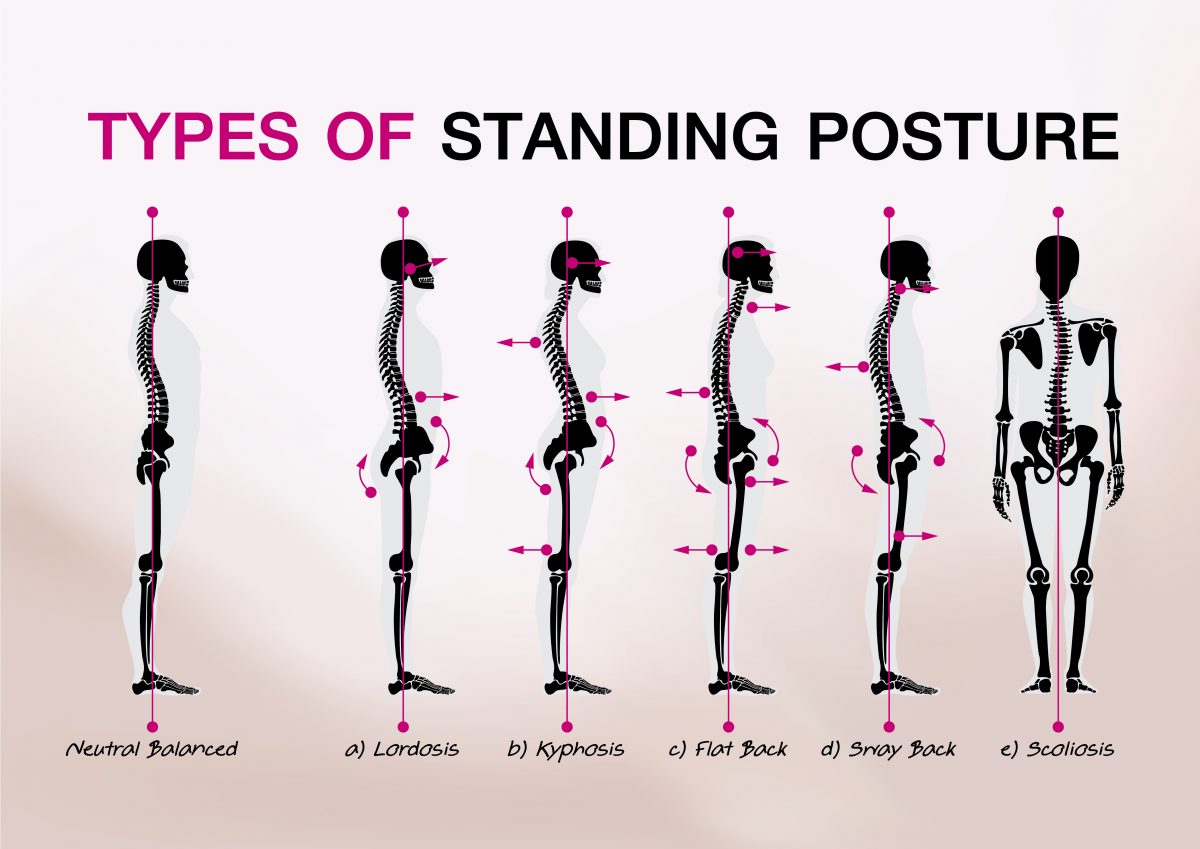
There are several types of postures and through my experience body reading they rarely occur like this but are various mixtures of a few of them.
1. Lordosis – the lumbar spine/lower back is curved more towards the front than normal and the pelvis is tipped forward
This could create more tension in the lower back muscles and front of hips.
2. Kyphosis – the thoracic spine/upper back is more curved backwards than normal and often the head sits forward as a result.
The upper back muscles can be over stretched, shoulder blades more rounded away from spine and could be more tightness in the neck.
3. Flat back – the lower back and sometimes the entire spine has lost its natural curves. The pelvis is often tilted under.
This can effect the shock absorbing potential of the spine.
4. Sway Back – the pelvis is often shifted forward of the midline and upper body shifts back to counter balance. The pelvis is often tilted under like in flat back posture.
This can put strain on the back of legs and the abdominals are often over stretched and weak.
5. Scoliosis – often a genetic posture you are born with where the spine curves and twists sideways and can often lead to a lot of pain.
The root cause of most back pain, if not a specific trauma, is poor alignment of the spine and pelvis. It may be easy to pass off back pain as something you experience from getting older but there is a reason you may be getting up each morning with stiffness and achiness.
When someone sits for long periods of time the tendancy is to tuck the pelvis under which will make the muscles of your back long and tight and the hamstrings short and tight. This can create a flat back posture over time and if the pelvis is fixed in this position too long will put strain on the low back tissue to try to take up the slack. The pelvis needs to move freely like in walking and when it doesn’t do so will stiffen up especially at night when you are at rest.
What about the neck pain that may bring you to the massage therapist or chiropractor once a month for relief. Could your head forward posture or kyphosis be the culprit. Is sitting at your computer 8 hours a day or chronic texting and walking changing your spinal curves?
Do your knees and hips ache if you stand for long periods of time? Could your lordosis or sway back posture be the defining factor? Perhaps your feet are not supporting you properly.
When was the last time someone really looked at your posture as most likely your GP who has known you for years has never done this for you. Why would you exercise without considering this?
Posture is at the root of pain and until it can be rebalanced injury will become an inevitability. This eventuality is amplified when performing high impact exercise. You may think pain is a normal response to working hard but it is NOT! Pain is the warning sign that your body is unhappy, that you have taken it to its limit, that it is about to break. The body needs to constantly be rebalanced depending on the stress we put upon it and learning good posture patterns will help it continue to be strong and mobile longterm.
Do let your bad posture catch up with you…
Book your Full Body Mot Sessions or join our Functional Movement program to correct your posture, free your body of pain and move more efficiently.